
OUR HISTORY
GAR was forged from this fundamental need: the desire of organizers to connect, conspire, and build a national movement rooted in pan-Asian, working-class communities.

Building upon decades of movement building, Grassroots Asians Rising (GAR) carries forward the legacy of grassroots organizing in our community and country. In the early 2000s, many pan-Asian grassroots organizations played leading roles in local multiracial coalitions. However, there was no national space. GAR was forged from this fundamental need: the desire of organizers to connect, conspire, and build a national movement rooted in pan-Asian, working-class communities. GAR’s origins lie in the early 2000s, as grassroots organizers recognized the need for a national space rooted in working-class communities. Through early networks, exchanges, and retreats, organizers built the relationships and trust needed to sustain a national movement.
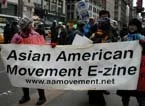
Azine at an anti-war rally in New York City, 2003.
In 2007, at the US Social Forum in Atlanta, an AAPI track for grassroots organizing and movement building allowed Chinatown-based organizations to meet and discuss the nuances of their Chinese American working-class bases. Here, those Chinatown-based organizations discovered a need and desire for AAPI grassroots organizations to continue learning from one another. Subsequently, those organizations would host local exchanges for their staff and members to share their experiences and struggles in San Francisco in 2008, and then New York and Boston in 2009. Through these exchanges, community organizers began to build strong relationships with one another locally, but continued to lack a national space. In 2010, these organizations reconvened at the US Social Forum in Detroit, Michigan and decided to broaden these grassroots exchanges nationally, planting the seed for the first ever national convening.
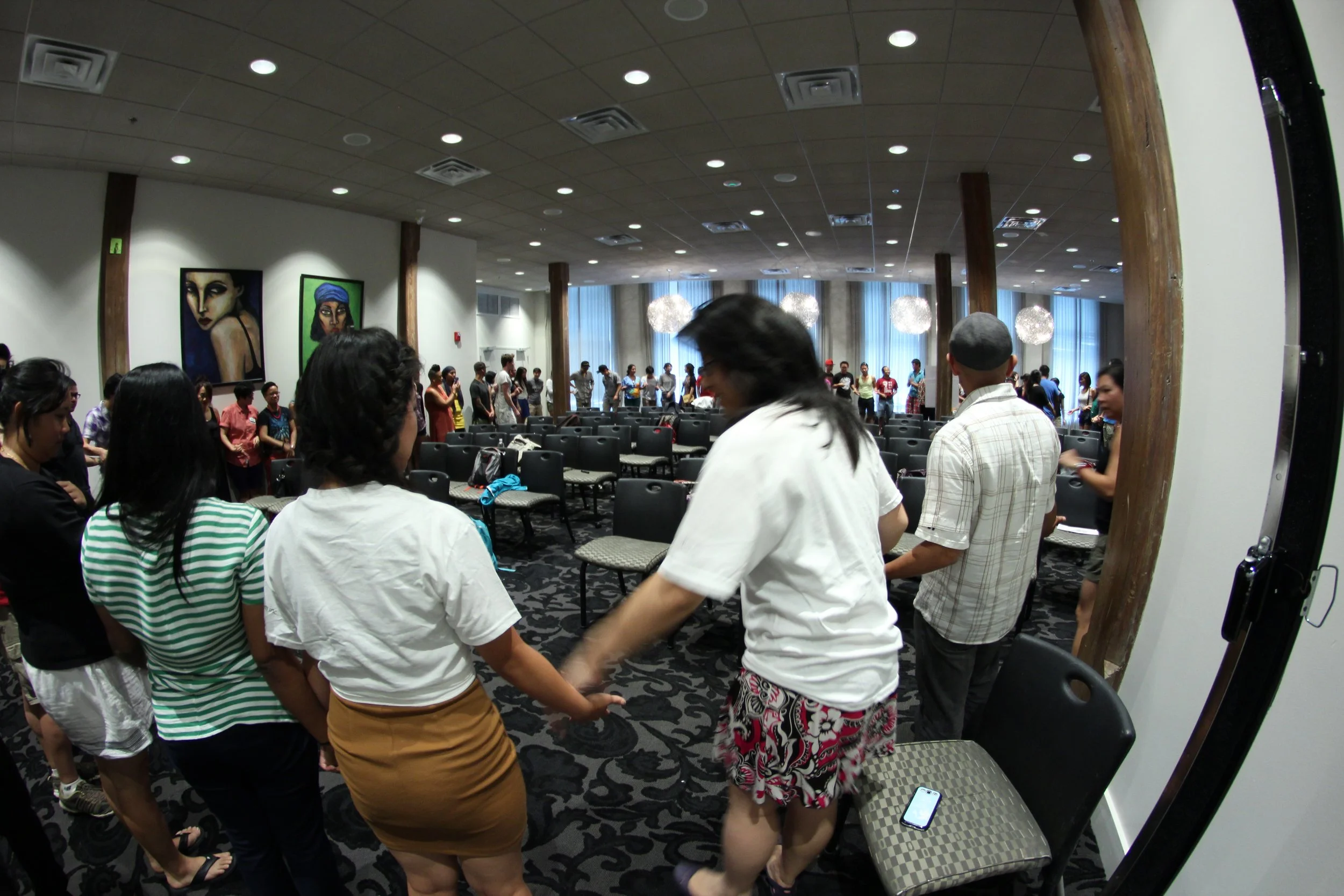
Organizers hold hands in a circle at the API Organizers Retreat, 2011.
2004-2007: Asian & Pacific Islander Movement Building Network
The desire for a national pan-Asian space led by the grassroots grew out of various overlapping political dialogues and crises that came to a head in 2004. In response to the rise of neo-conservatism re-election of President George W. Bush, Azine, a Boston-based collective of Asian American activists, recruited grassroots organizations from across the nation to form the Asian and Pacific Islander Movement Building Network. This was the first national network of grassroots organizations that were all rooted in working-class pan-Asian immigrant and refugee communities.
2007-2010: Chinatown Member Exchanges
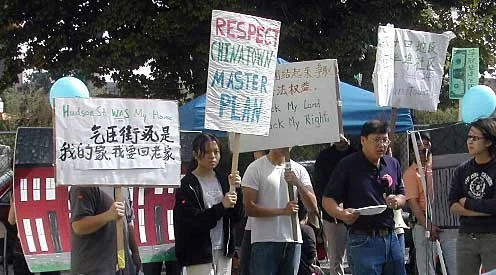
Boston-based organizers protest corporate development of Chinatown in the early 2000s.
2011: API Organizers Retreat in San Gabriel Valley, CA
In 2011, the Chinatown-based organizations’ efforts paid off as they organized the API Organizers Retreat in San Gabriel Valley, inviting twelve Asian American grassroots organizations from across the country. Here, Asian community organizers came together to learn from each other's best practices and strategies on how to better reach, mobilize, and organize working-class communities. This cross-learning helped organizers feel less isolated and provided new tools to strengthen their local work.
The 2011 API Organizers Retreat happened as pan-Asian communities rapidly grew across the country, leading to new efforts to organize Arab, Middle Eastern, Muslim, and South Asian (AMEMSA), Southeast Asian, and Korean communities. In the early 2010s, with stronger relationships between grassroots leaders and rapid growth of Asian organizations across the nation, the groundwork had been laid to build a national space and strategy for a pan-Asian grassroots movement.

In this era, organizers formally launched GAR and began defining structures for the long-term. In these years, GAR focused on bringing organizers together through convenings and political education to deepen relationships and strengthen this emerging national network.
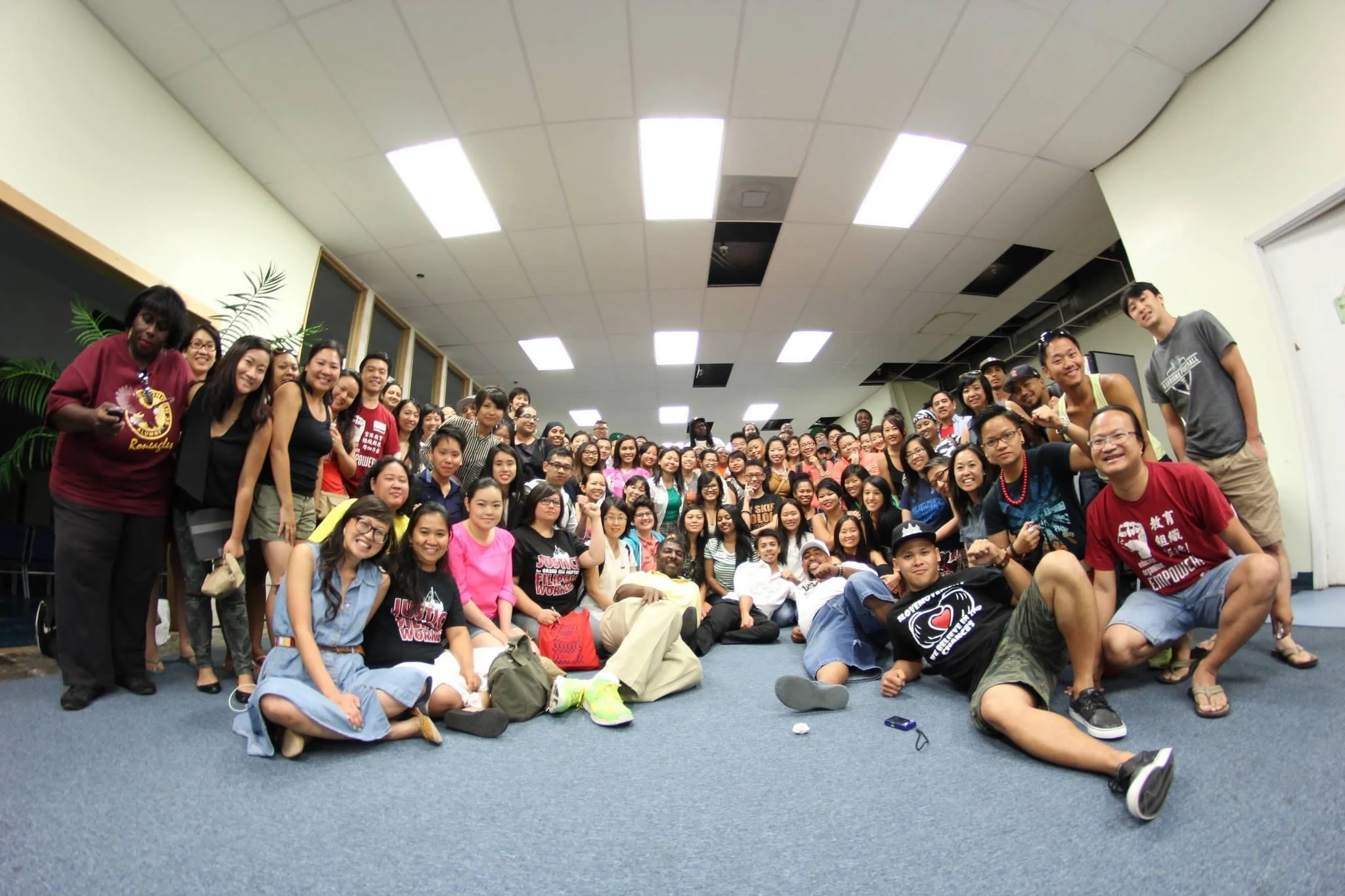
Group photo at the GAR Convening in New Orleans, 2013.
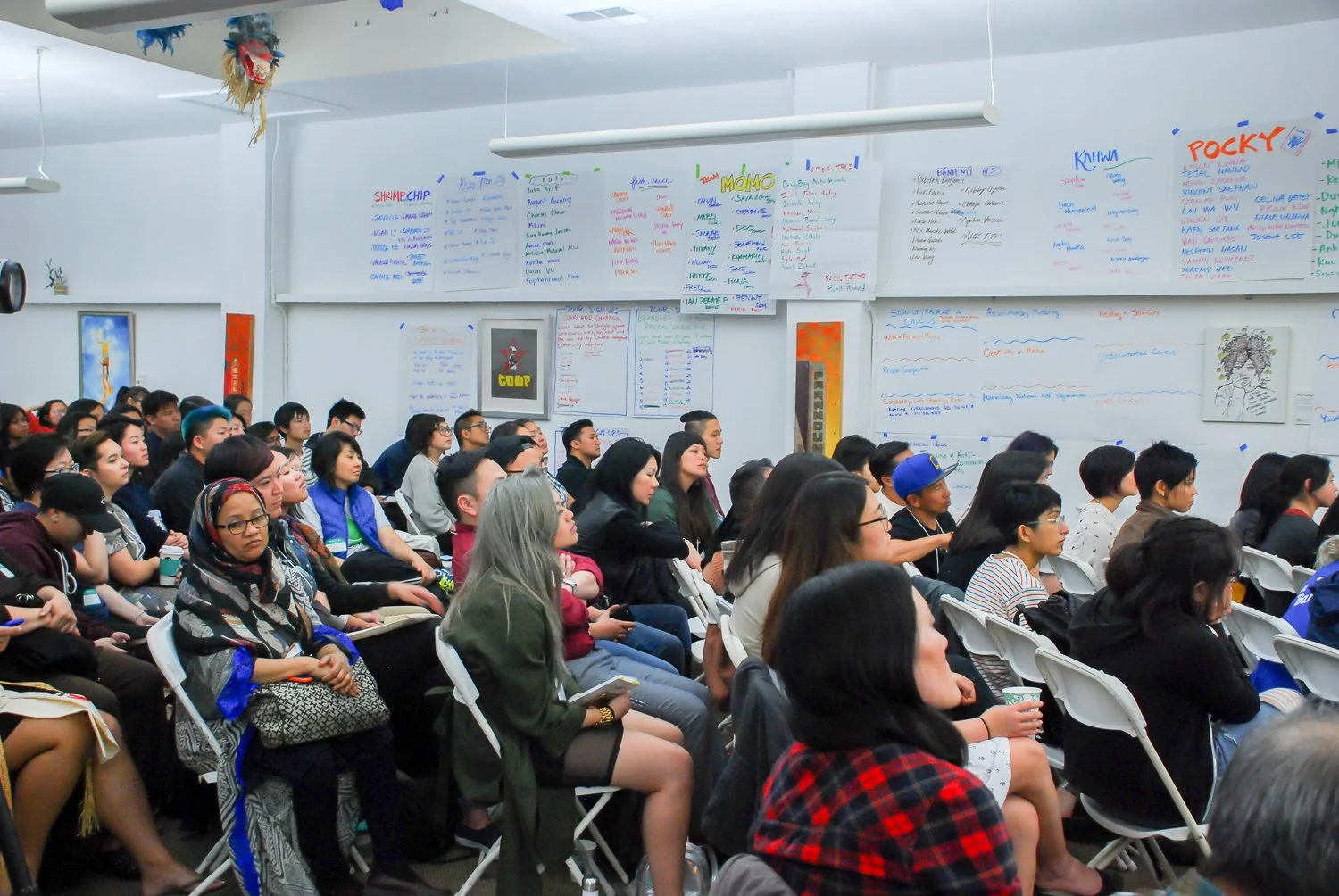
2013: GAR Convening in New Orleans, LA
In 2013, over 80 organizers from 30 grassroots AAPI organizations convened in New Orleans to explore the role of working-class, AAPI communities in the current political moment. The convening centered on the strategies needed to build working-class power within AAPI communities and work in solidarity with other movements for social change. Taking place in New Orleans, the convening highlighted the emerging organizing of AAPI communities in the US South, which had historically been overlooked.
This gathering formally launched Grassroots Asians Rising. GAR was founded to help facilitate relationships and coordinate national strategy between grassroots, pan-Asian organizations across the country. The gathering was an unprecedented assembly of working-class, queer, and youth-led organizations from East Asian, Southeast Asian, and South Asian communities, united around issues including racial justice, immigrant and refugee rights, workers' rights, housing justice, environmental justice, queer and trans liberation, gender justice, and youth empowerment, It would just be the beginning of GAR’s national alliance.
2016: Asian American Racial Justice Toolkit
In the mid-2010s, with more efforts to engage Asian American communities in elections and various political flashpoints such as the creation of #BlackLivesMatter, the fight against the Dakota Access Pipeline, and Trump running for his first presidential term, there was an urgent need for robust political education resources by and for pan-Asian working-class communities. With this context, GAR and AAPI FORCE-EF (Asian Americans and Pacific Islander for Civic Empowerment Education Fund) coordinated 15 grassroots organizations to put together the Asian American Racial Justice Toolkit.
To create the AARJT, grassroots organizations co-created curriculum and lesson plans that began with people’s lived experiences, built structural awareness of why those experiences are happening, and tied personal experiences to the oppression of others. These resources were then tested out with working-class members to make sure they were effective in developing understanding of the topic. The result was fifteen interactive trainings covering a wide range of topics that tackle power and oppression. The AARJT was, and still is, an intervention by Asian American organizers to offer the rigorous political imagination and resources needed to develop political clarity and deepen collective understanding of power and oppression.
Organizers listening to a presentation at the GAR Convening in Oakland, 2017.
2018: GAR AAPI YOUNG (Asian American Pacific Islander Youth National Gathering) in Philadelphia, PA
At the GAR gathering in Oakland there was a strong desire to facilitate an exchange to create a space for Asian American youth leaders and organizers to connect with a larger national movement and build relationships with one another. In 2018, GAR facilitated AAPI YOUNG to bring together 75 youth members and 20 staff supporters from twelve grassroots organizations from across the nation.
AAPI YOUNG was centered on letting young people build power with one another, and the programming focused on youth initiative, voice, and leadership taking precedence. Youth attendees’ reflections, actions, and connections with one another revealed the need to further create spaces like these. Many of the youth and adults involved reported that this national convening allowed them to see beyond their local communities, highlight trends happening across the country, and build solidarity as a pan-Asian movement.
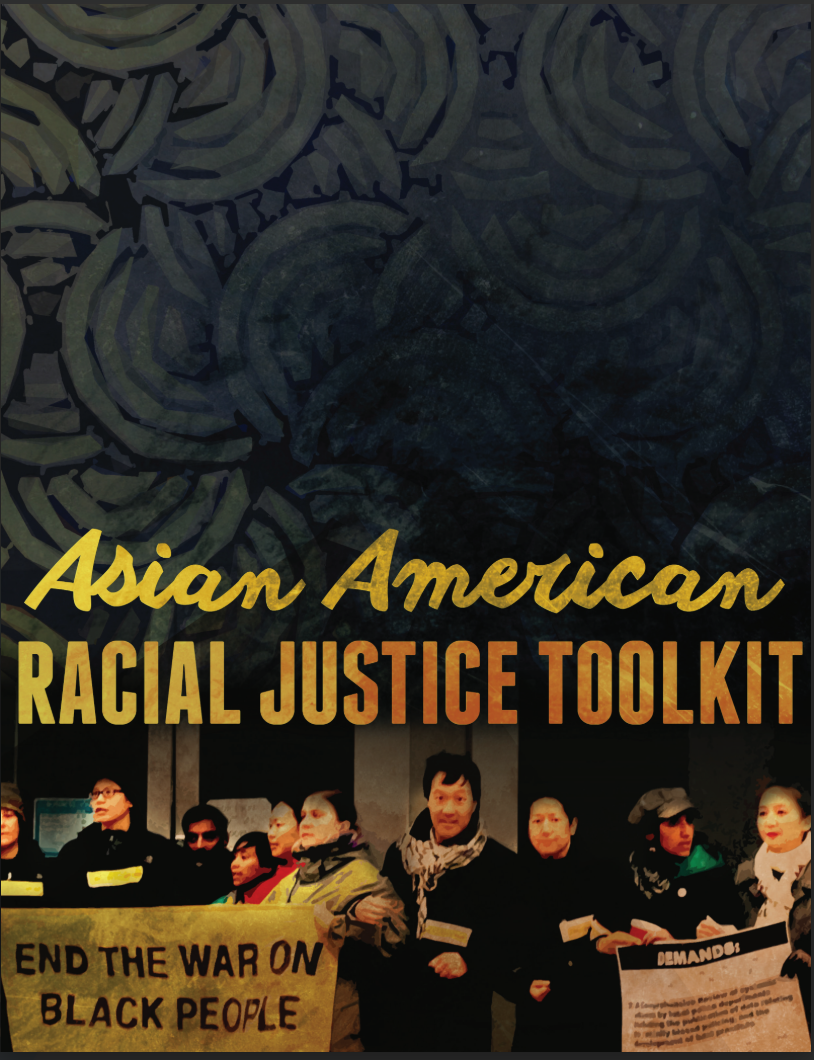
Cover of the Asian American Racial Justice Toolkit, 2016.
2017: GAR Convening in Oakland, CA
With the 2016 presidential election resulting in even more racist, xenophobic, misogynist, Islamophobic rhetoric and violence, 2017 was a critical time for pan-Asian organizers to strategize and connect with other movements and communities of color.
GAR brought together over 200 grassroots organizers from across the country to Oakland in order to conspire, strategize, and build towards a national movement for grassroots Asian organizing in our communities. As immigrant and refugee communities were feeling increasingly hopeless, isolated, and scared, GAR and our members knew the importance of doing deep organizing to bring our people along as we build towards multiracial unity and justice. No one can bring about collective liberation alone, and GAR was organizing a broader movement of Asian American communities to help all of us get to a better future.
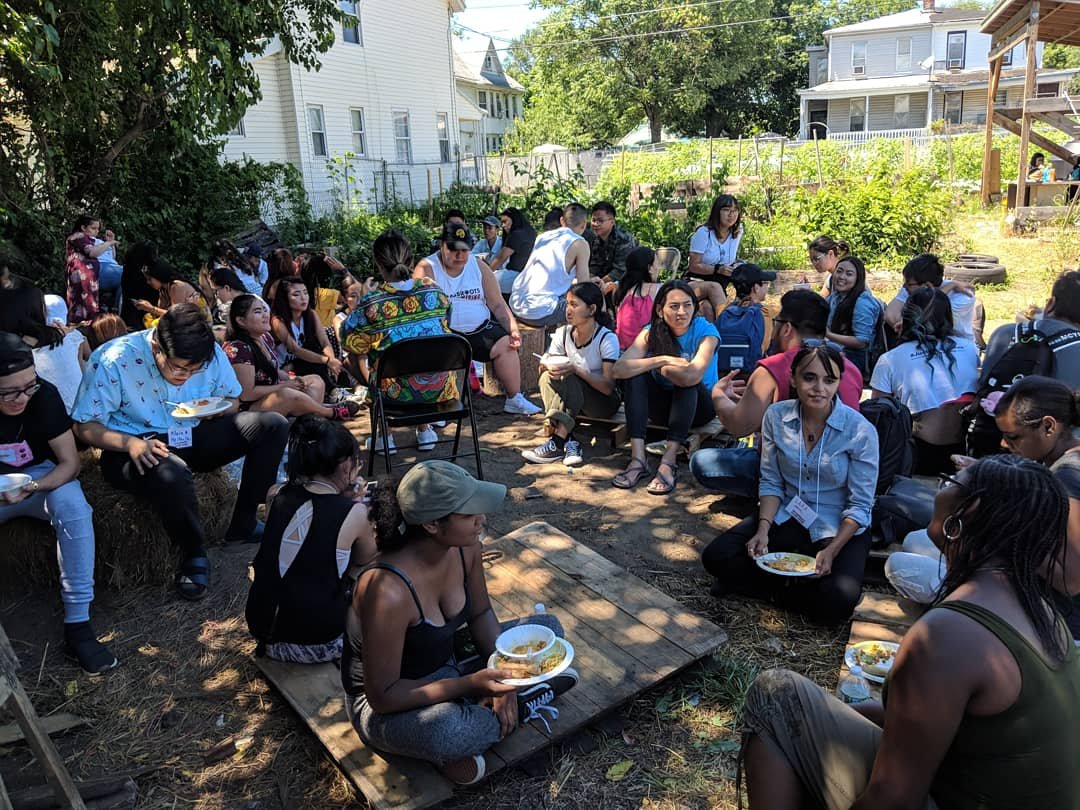
Organizers and youth members share a meal outside during GAR AAPI YOUNG in Philadelphia, 2018.
2019-2020: GAR joined Rising Majority’s Leadership Team.
In 2019, GAR joined the Leadership Team of Rising Majority, a multiracial network formed by the Movement for Black Lives to unite social movement organizations to work towards the common goal of fighting neoliberalism and the threat of fascism. GAR joined with the understanding that working-class Asian communities must build power alongside other communities to win lasting change. As a part of the Leadership Team, GAR has helped shape national strategy and the political direction of the broader network.
In 2020, GAR worked closely with Rising Majority to respond to the overlapping crises of the COVID-19 pandemic and national protests for racial justice and police accountability. GAR mobilized for rapid-response mass actions following the leadership of the Movement for Black Lives, helped to build out the Rising Majority membership, and co-facilitated political education efforts.

This is the era that GAR is currently in! As pro-authoritarian forces increasingly target Asian communities through disinformation and recruitment, GAR has deepened our focus on member rigor, political education, tool-building, and cross-community strategy alignment. Today, GAR works across local bases to identify and contend with pro-authoritarian forces in order to strengthen working-class organizing for progressive change nationwide.
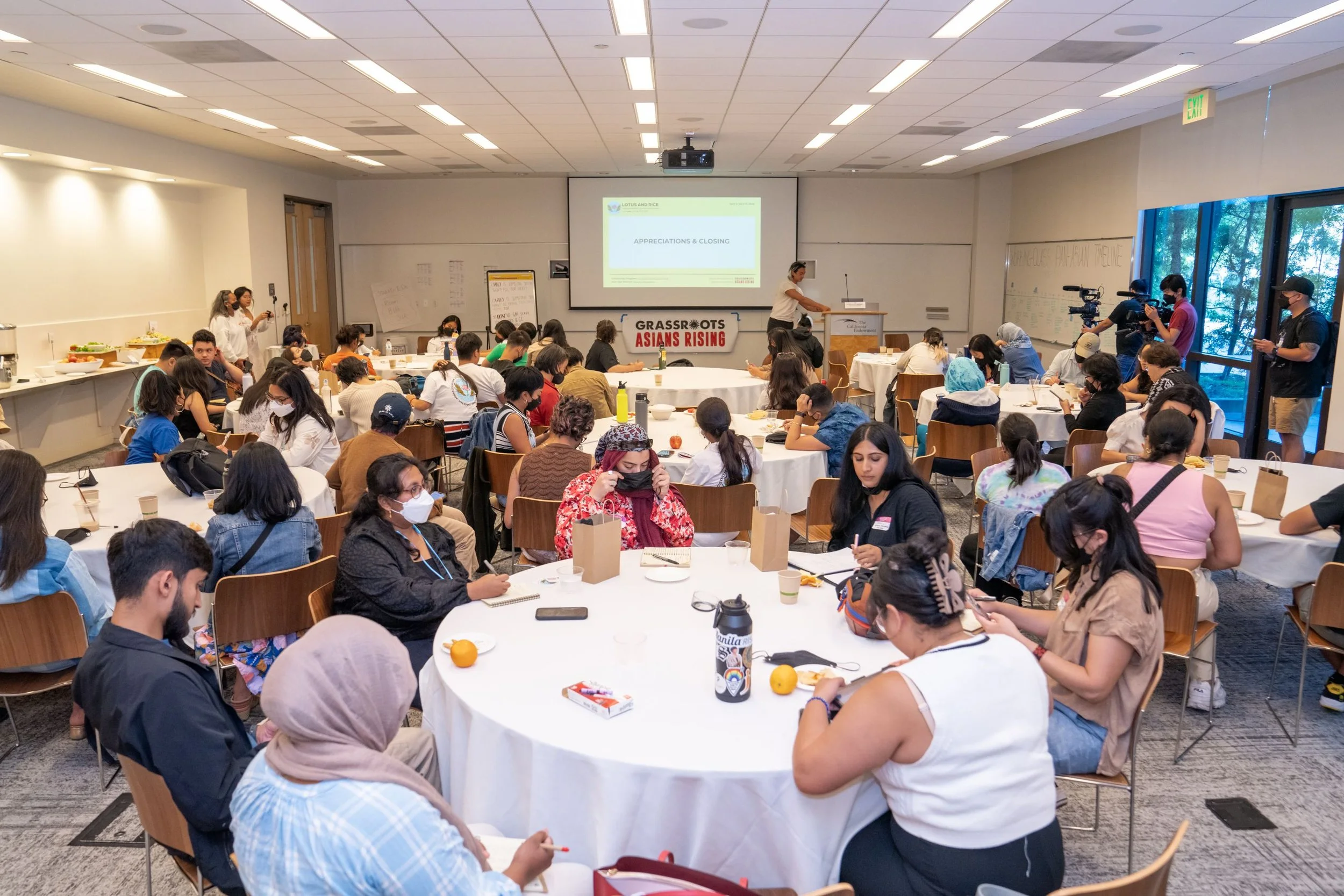
Organizers discussing in small groups at the GAR Lotus & Rice Convening in Los Angeles, 2023.
2021: Defining Strategy and Strengthening Mission
After years of network building and grassroots experimentation, the Coordinating Committee had amassed big questions about GAR’s strategy and work. So in 2021, GAR and the Coordinating Committee raised enough resources to hire full-time staffing for the national network. With new staffing, GAR set out to clarify many of the outstanding questions about GAR’s work in order to develop the organization: Does GAR organize individuals or organizations? Is GAR a policy vehicle or a movement-building vehicle? How can GAR provide rigorous political education to those most vulnerable to pro-authoritarian organizing?
In 2021, GAR clarified our mission, vision, theory of change, membership, and strategy, to strengthen GAR’s foundation. Through those conversations, GAR's role in the movement became clear: strengthening local efforts to organize pan-Asian communities toward working-class interests. That is how we protect our communities from being actively recruited into harmful agendas and build towards a future where working-class communities are safe from violence and exploitation.
2022: Growing GAR Membership
With a clear strategy, GAR formalized our membership process and made a commitment to supporting member organizations to build their capacity and community power through creating inclusive, relationship-centered movement spaces. In 2022, with this new membership structure, we brought in AROC, PWC, CCED, AAU, APIENC (now LavNix), APSC, and Adhikaar as our first members.
Since then, GAR has recruited members to join our network:
2022: AAAF, AAAN, ACE Collaborative, EMAC, Jakara, MJF, Rising Voices, HIP, RCS, OPAWL, Laal, AARW, Hamkae Center, and Equality Labs
2023: Woori Juntos, CHNSC, FAJ, and HANA Center
2024: Damayan and Afghans for a Better Tomorrow
2026: AFIRE, SBYC, MPOP, and SEACA
In the last four years, we have focused growth geographically in Midwest, South, and Southwest, and amongst AMEMSA and Southeast Asian communities. Today, GAR’s membership includes 38 strong, grassroots organizations that organize working-class, pan-Asian communities across the nation. Neighborhood by neighborhood, city by city, state by state, GAR is striving towards a shared vision of a sustainable, powerful, and progressive national working-class, pan-Asian ecosystem.
2023: Translation of the Asian American Racial Justice Toolkit
At the GAR gathering in Oakland there was a strong desire to facilitate an exchange to create a space for Asian American youth leaders and organizers to connect with a larger national movement and build relationships with one another. In 2018, GAR facilitated AAPI YOUNG to bring together 75 youth members and 20 staff supporters from twelve grassroots organizations from across the nation.
AAPI YOUNG was centered on letting young people build power with one another, and the programming focused on youth initiative, voice, and leadership taking precedence. Youth attendees’ reflections, actions, and connections with one another revealed the need to further create spaces like these. Many of the youth and adults involved reported that this national convening allowed them to see beyond their local communities, highlight trends happening across the country, and build solidarity as a pan-Asian movement.

GAR members discuss with one another at the GAR Membership Convening in Chicago, 2024.
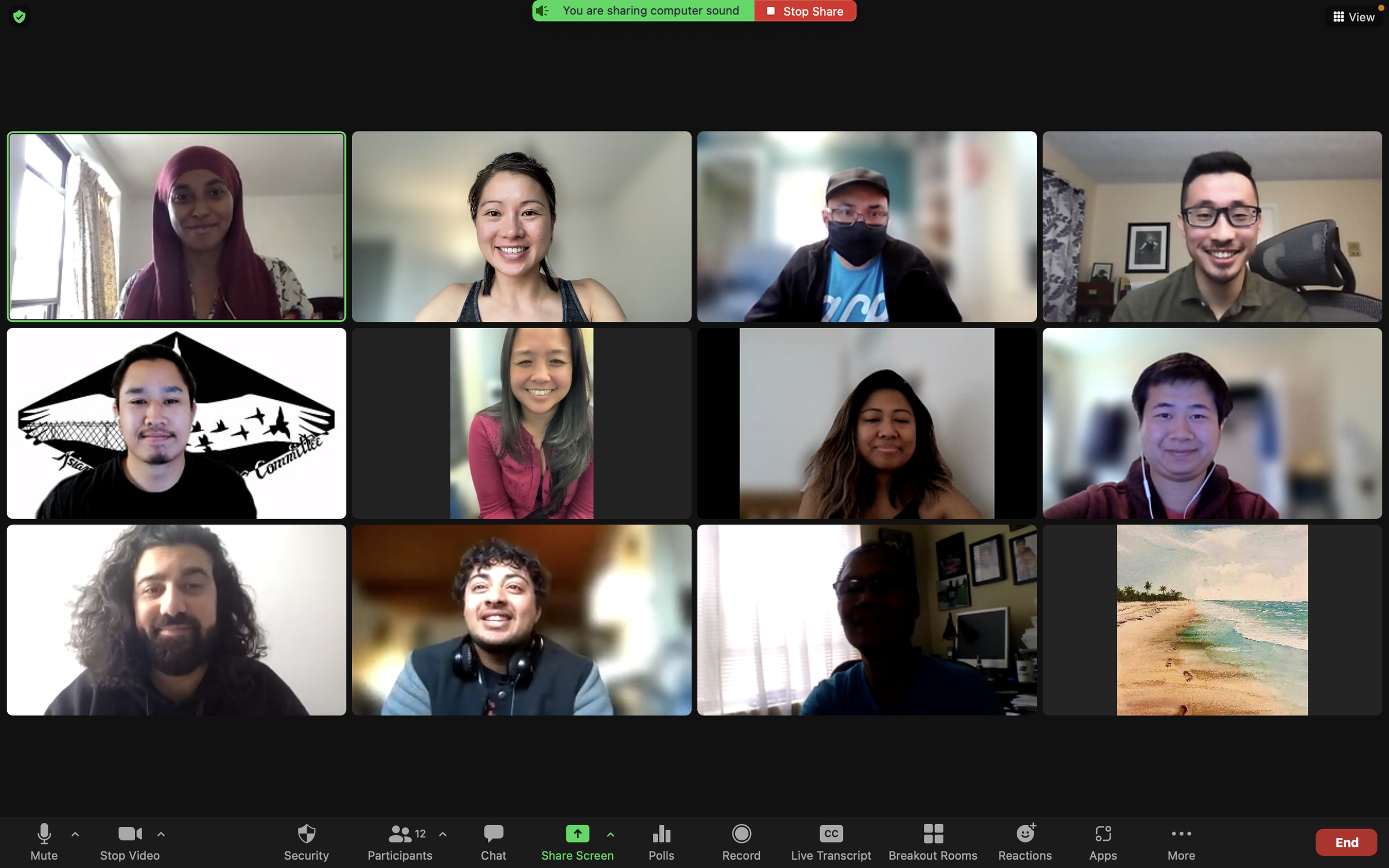
Group photo of a GAR new member orientation, 2021.
2023: GAR Lotus & Rice Membership Convening in Los Angeles, CA
In 2023, GAR facilitated the Lotus & Rice Membership Convening for over 100 grassroots organizers in Los Angeles. The theme "Lotus and Rice" evolves from "bread for all, and roses too." Lotus and rice are both plants found, appreciated, and eaten throughout the pan-Asian diaspora. Lotus when planted in rice patties promotes and exponentiates the growth of rice by improving soil quality and promoting a more sustainable farming system. By uniting our member organizations to cross-pollinate, GAR aims to accelerate learning and strengthen our collective power to organize more strategically and effectively.
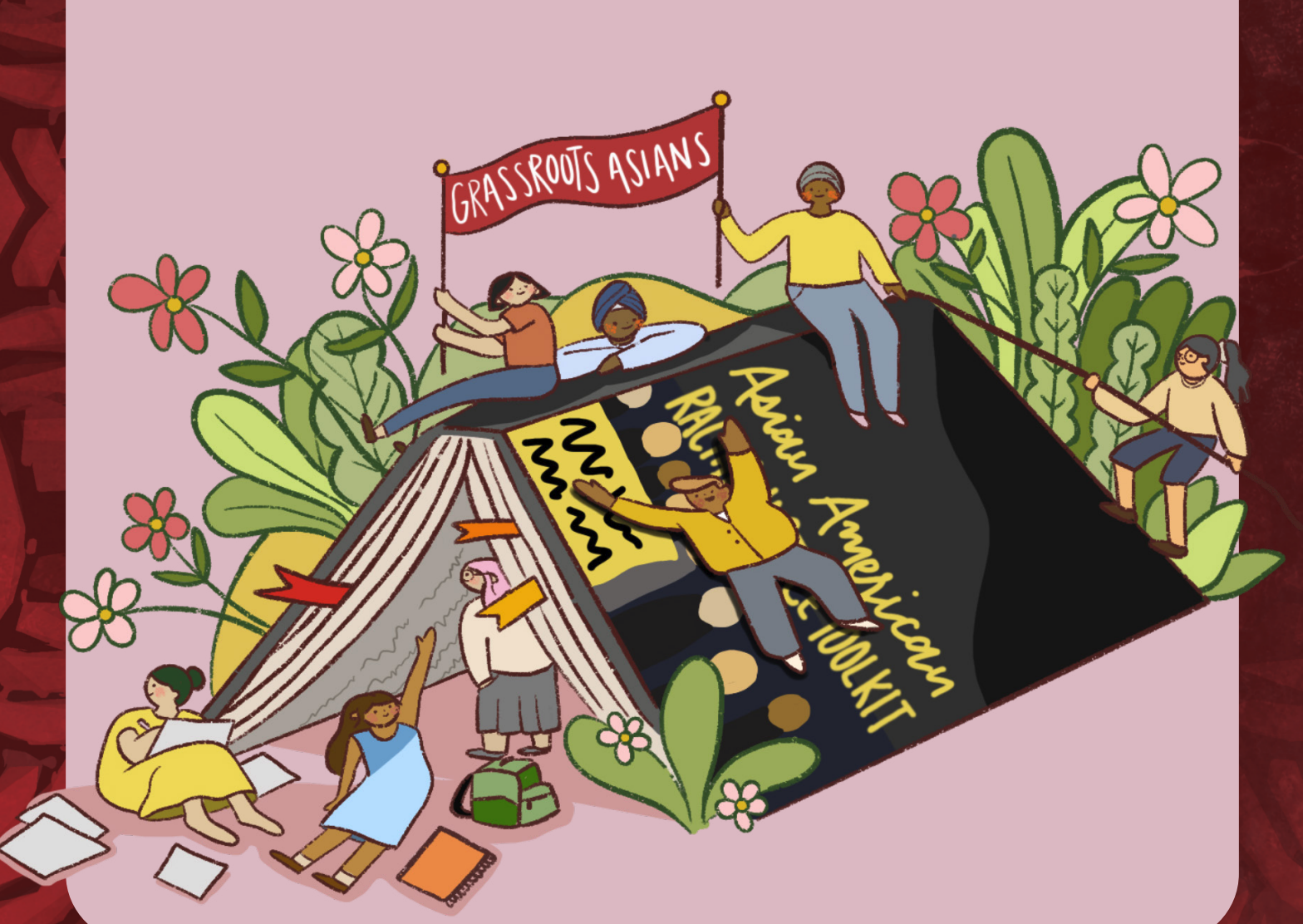
Cover of the translated Asian American Racial Justice Toolkit, 2023.

Cover of the Wedge Workbook, 2023.
2024: GAR Membership Convening on Contending with Pro-Authoritarian Forces in Chicago, IL
For decades, grassroots organizers have been wary of the small, but vocal and growing, contingent of conservatives within Asian and Asian American communities who have actively collaborated with white supremacists. By launching disinformation campaigns and aggressive recruitment at religious institutions, schools, and community centers, pro-authoritarian forces developed effective ways to influence vulnerable communities. In 2024, GAR convened our membership in Chicago to share strategies and lessons learned on how building strong working-class, pan-Asian bases is crucial in contending pro-authoritarian forces in their local communities.
2025: Wedge Workbook
Following the GAR Chicago Convening, a committee of GAR members, including AAAN, ACE, APEN, DRUM, HANA Center, Lavender Phoenix, and SEAC Village, began refining how we can “wedge” pro-authoritarian forces against each other and sway our communities back towards us. With the support of GAR staff, this committee created a shared definition of “wedge issues” and created the Wedge Workbook as a tool to pinpoint wedge issues, identify pro-authoritarian forces influencing local conditions, and inoculate pro-authoritarian narratives and organizing in your working-class bases. Check out the Wedge Workbook.