
AAAN, AAU, and ACE join GAR Coordinating Committee
Transitions make space for us to honor those who have given their hearts and minds to this network, while also passing the torch to new leadership to shape our future. As such, we also welcome Asian Americans United (AAU), AAPI Civic Engagement Collaborative (ACE), and Arab American Action Network (AAAN) into our Coordinating Committee.
Roksana, our Executive Director, first welcomed AAU, ACE, and AAAN as some of GAR’s first official members in 2022. Since then, she’s seen up close how these organizations have stayed invested in GAR, become more rigorous in their local work, and learned to connect organizing struggles across geographics, ethnicities, and communities. Locally, AAU is doing cutting edge work in defending Philly Chinatown from corporate greed, ACE organizing Asian gig workers in a right-to-work state like Virginia, and AAAN is fortifying sanctuary protections in Chicago. These organizations have already been leading GAR’s strategic work by helping develop the Wedge Framework and defining key metrics of strong basebuilding organizations.
Recently in a plenary at our 2026 Lotus & Rice Convening, we heard from leaders at AAU, ACE, and AAAN about how they are Reclaiming Our Organizing in increasingly scary times with multiple crises happening at once. They also shared why they participate in GAR. Here’s what they had to share:
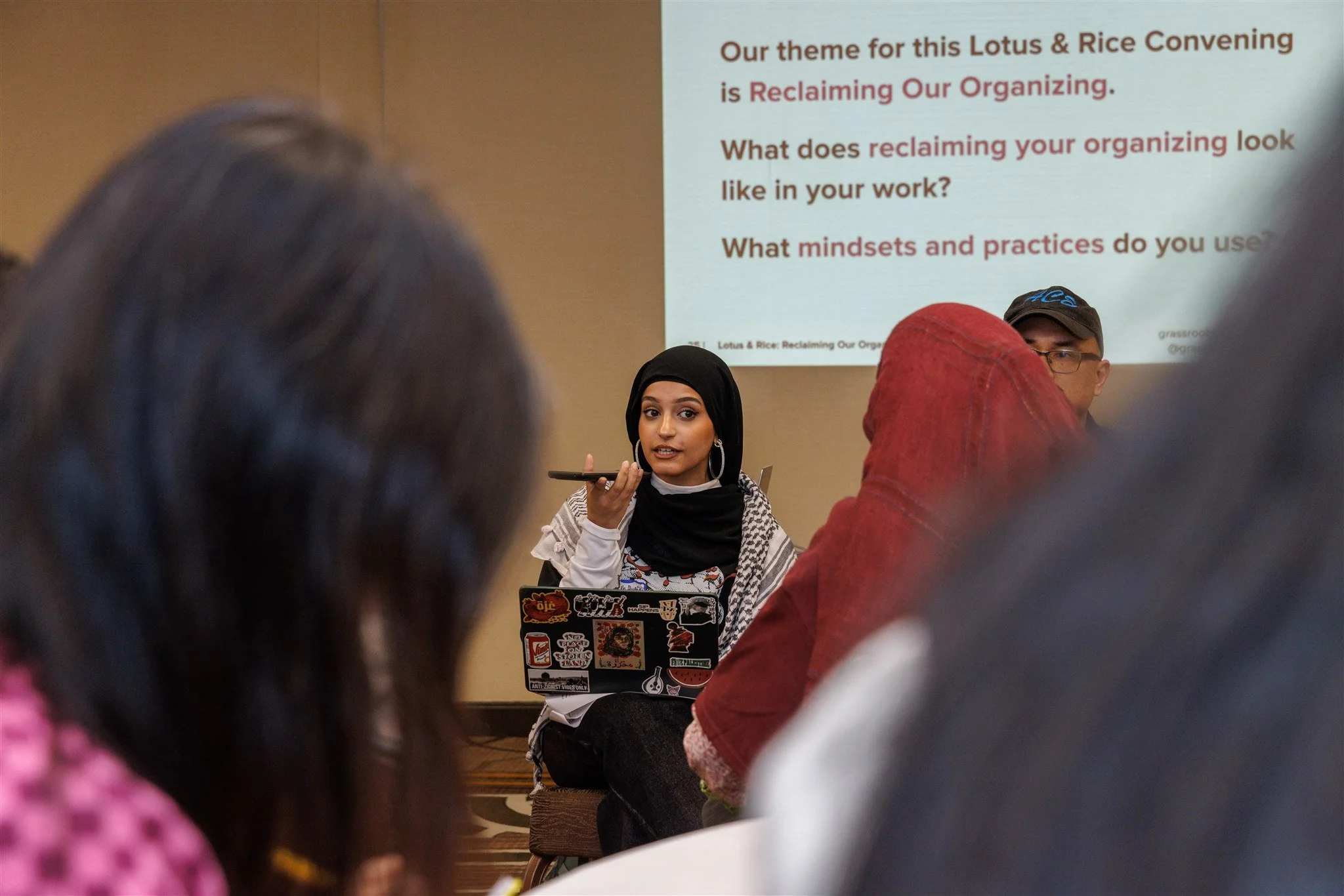
Nadiah rooted us in Chicago where AAAN has modeled how to do rapid response with escalated violence from ICE and mass mobilizations for Palestine, while absorbing people into AAAN’s long-term organizing. She shared that “[AAAN] participate[s] in GAR to sharpen our shared analysis and strengthen our skill as organizers. While we've long understood the shared struggles between Arab and broader pan-Asian communities, GAR was the first space that AAAN as an Arab organization was included under the pan-Asian category. This allowed us to connect with organizations across cities and truly affirm that we are not alone in this work. Being in a space like this allows us to gauge in conversations, really understand where our movement is, and build the kind of collective power our communities really need.”
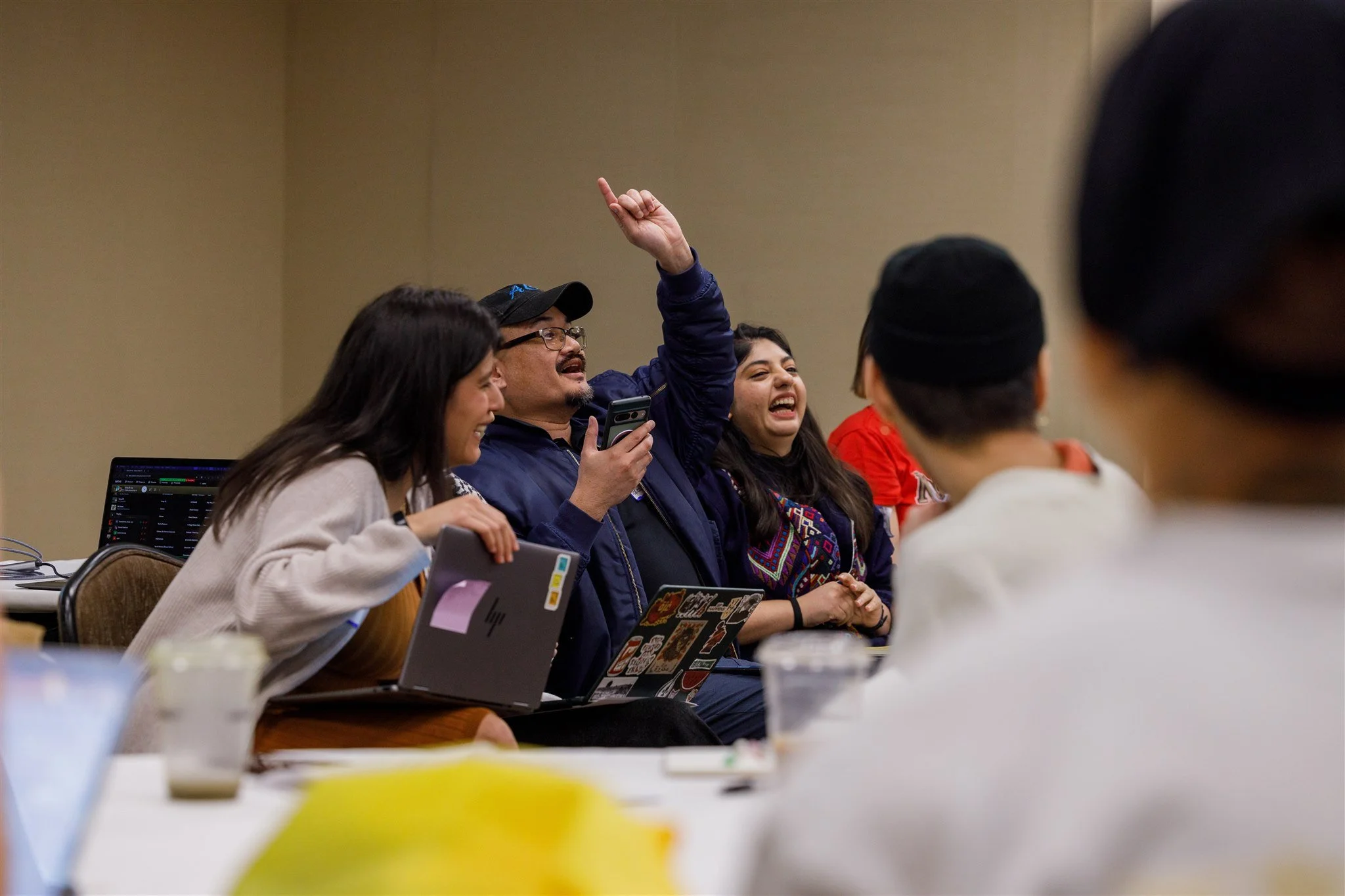
Mitchell shared how ACE strategically chose a working-class base and fight that moves and mobilizes un(der)organized people within working-class, pan-Asian communities. When asked how ACE has transformed because of GAR, Mitchell answered, “We participate in GAR, because look at this! Look at the room around you! [Mitchell gestures to a room full of 100+ pan-Asian organizers] This is the only space, or one of the few spaces, that is strictly focused on base building and organizing AAPI and AMEMSA working-class people. When you go to other general organizing training, you don't get to see peers, you don't get to see folks from your community, you don't get to talk to people who've been through what you've been through and to exchange good ideas. These are all things ACE gets to do at GAR.”
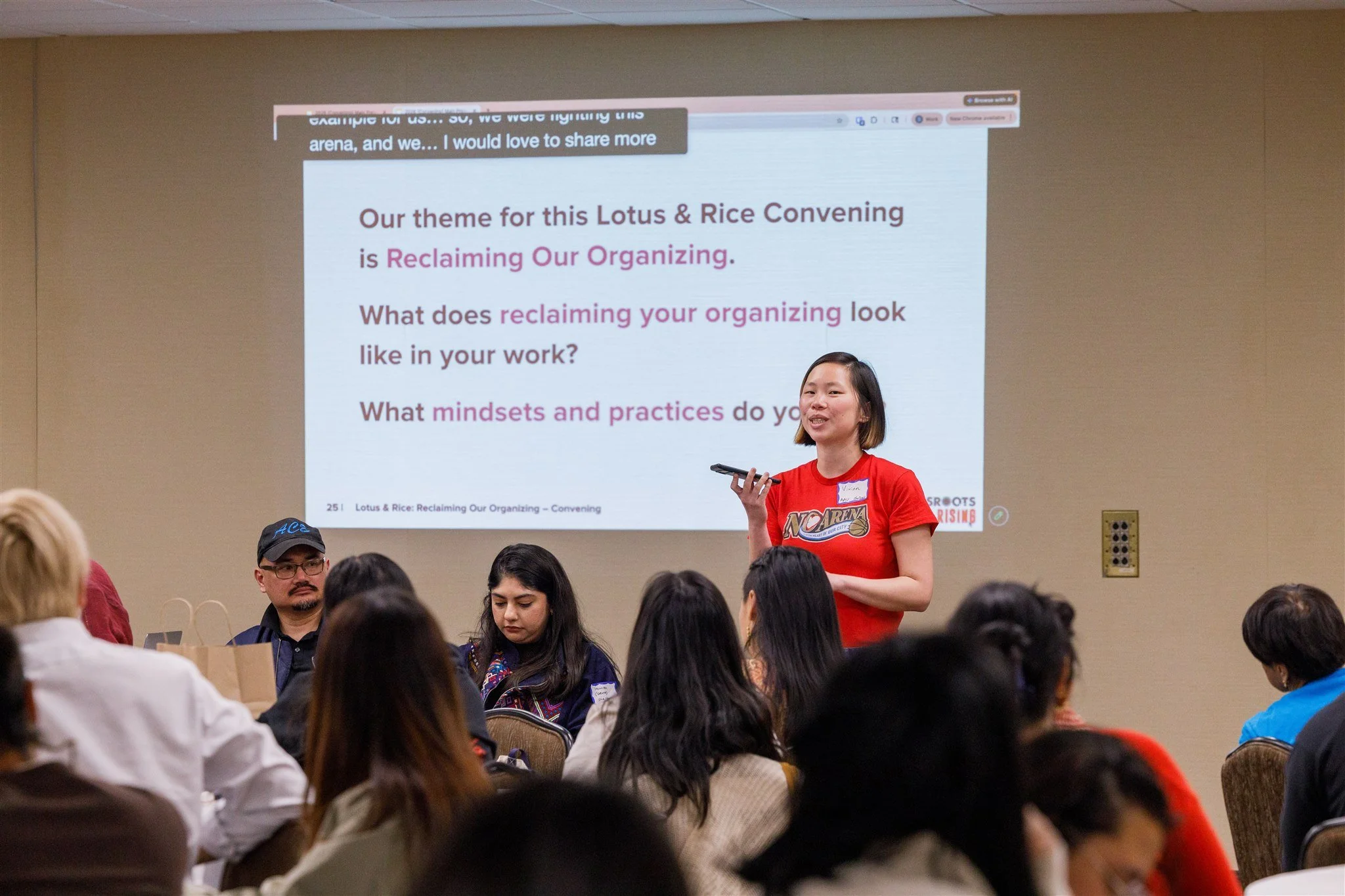
Vivian reflected AAU’s fight against a sports arena in Chinatown and how organizers learned to be creative with their organizing and absorbed a lot of new members. Vivian emphasized that she organizes because of the relationships she builds in spaces like GAR. She said, “When we talk about grief, sometimes, there is no meaning. Sometimes, we are just watching people die. But if we want to survive this together, we can just look around. We have each other in this room. There’s so many of us in so many. What I always come back to is that no matter where I look, I know there is someone who believes what we believe, who cares about this. We may not always say it to each other. And so our work as organizers is expressing that. It’s putting that out there and throwing a line that someone can pick up.”