
APEN, CAAAV, and CPA transition out of GAR Coordinating Committee
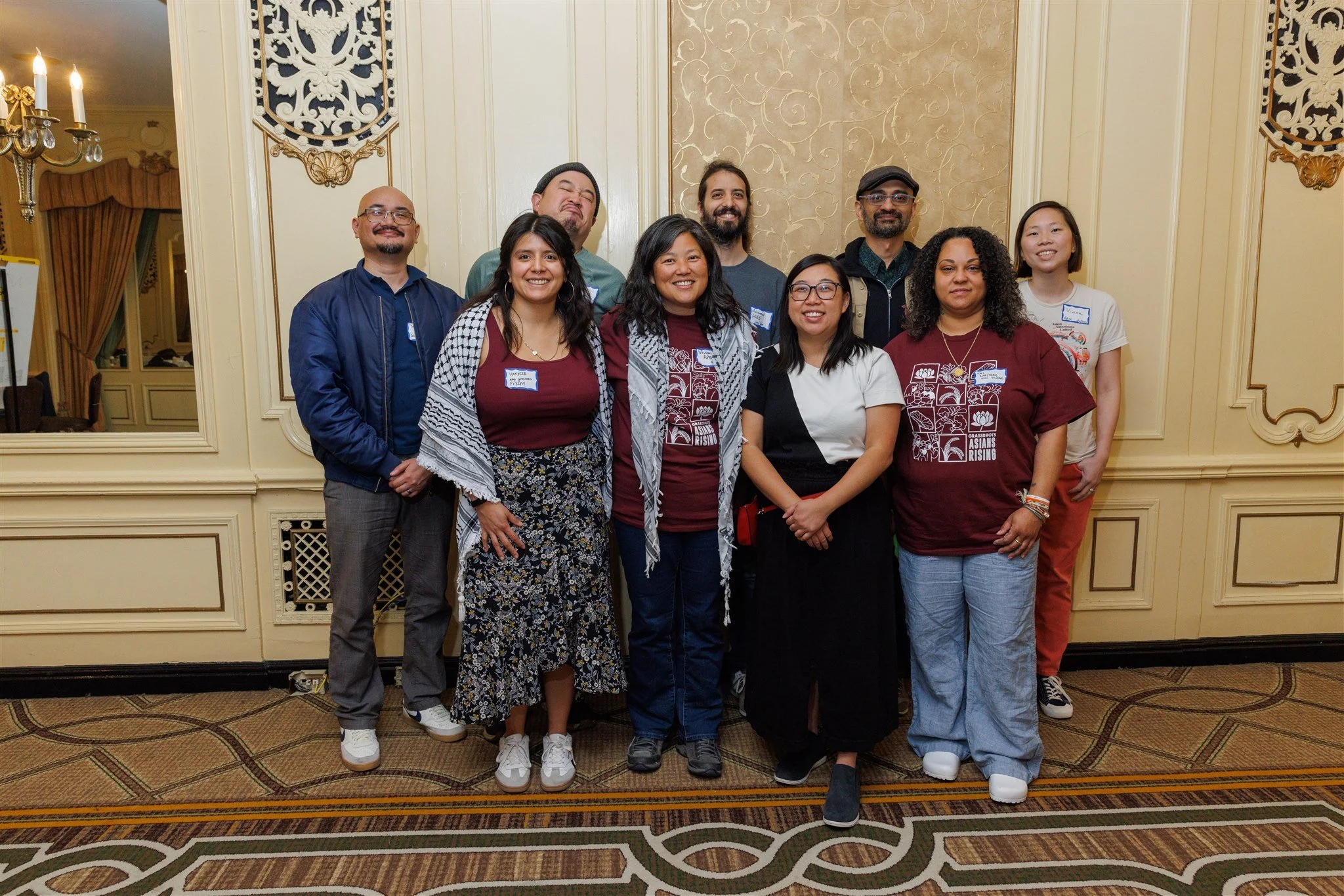
Coordinating Committee at 2026 Lotus & Rice Membership Convening. Photo by Fabian Cisneros.
Each year, Asian American and Pacific Islander History Month reminds us to honor the generations of organizers, movement builders, and community leaders who come before us. AAPIHM is a time for us to reflect on our histories and to recognize the ongoing work of building power across communities rooted in solidarity, resilience, and shared commitment to justice.
In this spirit, we are excited to share an announcement about GAR’s next chapter. Chinese Progressive Association (CPA), Asian Pacific Environmental Network (APEN), and CAAAV are transitioning out of GAR’s Coordinating Committee.
GAR’s origins lie in the early 2000s, as grassroots organizers recognized the need for a national space rooted in working-class communities. Together, these organizations created GAR’s Coordinating Committee to direct, oversee, and evaluate the network’s political direction and strategy. Learn more about GAR’s history here.
For over twenty years, GAR has been guided by a Coordinating Committee rooted in the leadership of our founding organizations: Chinese Progressive Association (CPA), Asian Pacific Environmental Network (APEN), and CAAAV. Their leadership helped build not only the network itself, but the relationships, trust, and political alignment that sustain us today. But leadership is never static, it changes and grows as our movement grows.
We are deeply grateful to the many leaders, organizers, and community members that have guided GAR since our inception. CPA, APEN, and CAAAV’s vision, partnership, and radical belief in GAR have helped build a strong and enduring network.
When reflecting on this transition, Roksana GAR’s Executive Director shared, “GAR’s evolution and this transition in our Coordinating Committee show what is possible when grassroots organizations come together with a shared commitment to working-class communities. Over twenty years ago, our founding organizations had the clarity and vision to build a national space that centers working-class, pan-Asian communities. For decades, they have helped grow GAR from a small ad-hoc coalition into a national network of 38 organizations. As founding organizations are transitioning out and new members step into leadership, I am excited because it reflects the strength and sustainability of how we have built GAR together.”