
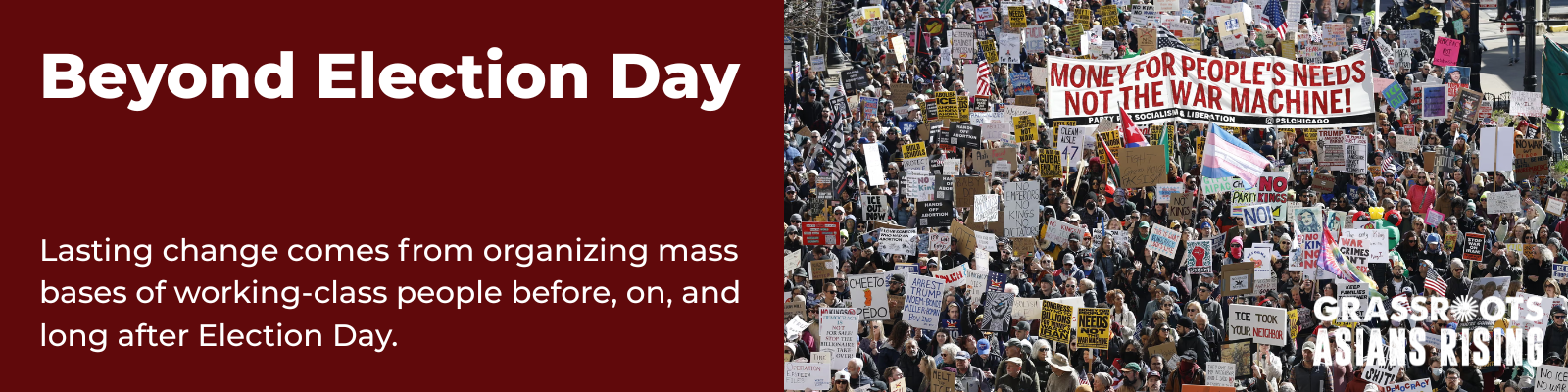
GAR says this every year because it continues to be true: We cannot just win at the polls. Lasting change comes from organizing mass bases of working-class people before, on, and long after Election Day.
For months, GAR member orgs have been making sure their uncles, aunties, and neighbors know how important it is to vote today. In those conversations, organizers have been hearing about the many issues that shape their lives: rising rents, unaffordable groceries, low wages, unsafe workplaces, access to healthcare and interpretation, and safety in our neighborhoods. Listening to these concerns is not only about getting people out to the polls; it is how we build long-lasting power that centers the issues and lives of poor and working-class people.
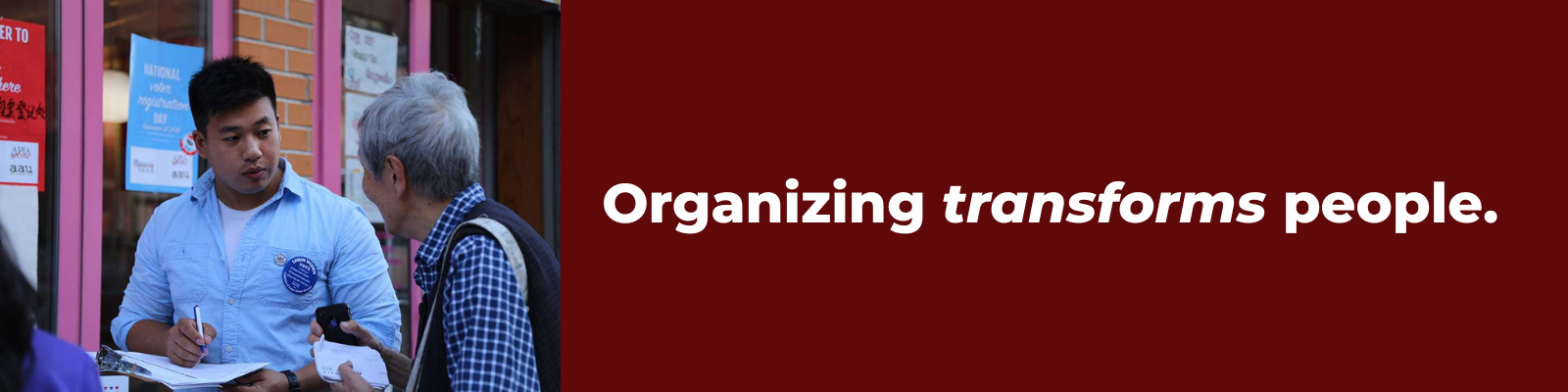
What does it mean to organize? Organizing must be more than turnout on election day or mass mobilizations. Organizing requires that we build relationships over time, develop leaders from within our communities, and help people move from isolated struggles to shared action. Organizing transforms people. When our neighbors, students, workers, and elders come together to decide what they need and how to get it, they discover their own power to be an active part of building a better world.
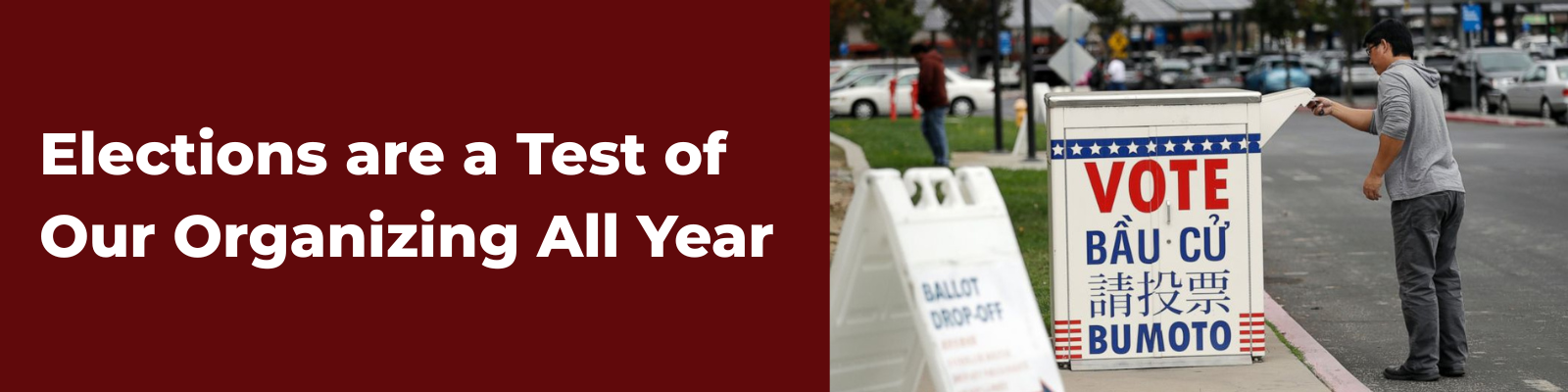
Elections are a test of the organizing we are doing all year. What happens in the weeks before an election shows us how deep our relationships run and where gaps remain. Where there are voids of organizing in our community, someone fills it.
Opportunistic forces have found real fears about safety, about our kids’ futures, about whether hard work still leads anywhere, and claimed that the villain is other working-class communities of color. In New York City, organizers have noticed how tough-on-crime messaging and fears about rising anti-Asian violence politically shifted working-class Asian voters. Similarly, in Oakland, recall campaigns unfolded amidst deep concerns about public safety, including long-held frustrations over a surge in violence against Asian community members.
Whether a community’s concerns become a source of division or foundation for lasting power depends on who is organizing those conversations, in what languages, and to what frequency. A single election result doesn’t change who holds sway in our communities. Influence belongs to whoever has built infrastructure, has led spaces where community members convene, and has shown up every day of the year, in ethnic media, parent teacher associations, group chats, and places of worship. Only sustained organizing can build something that lasts.
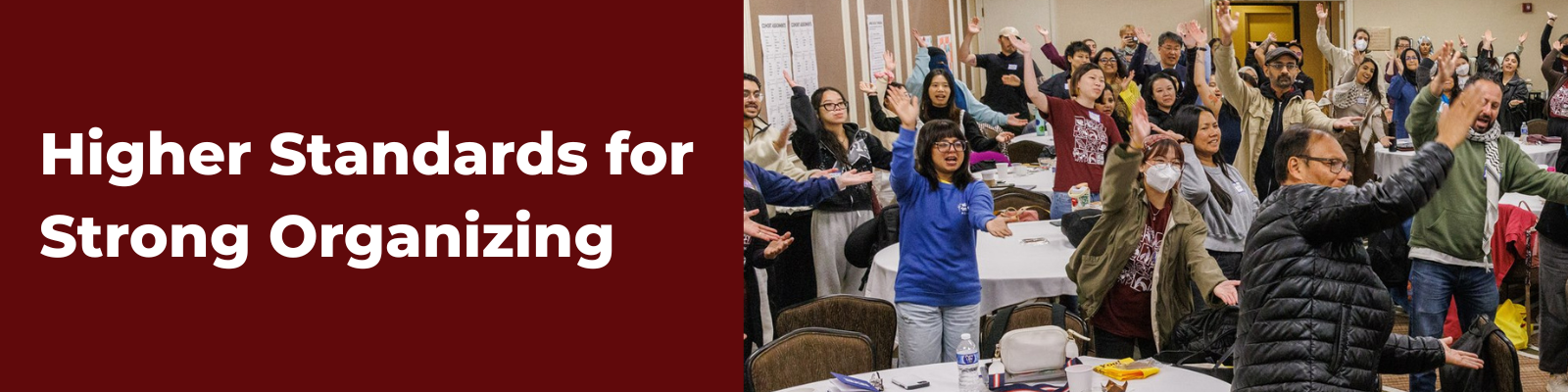
We must hold ourselves accountable to higher standards for strong organizing. Organizing is about deep and transformative relationships building. It should be accountable to the people we serve, grounded in the daily realities of working-class people, and built to last beyond any one campaign or election cycle. As a network, GAR is committed to holding ourselves to that standard and sharing what we learn. This year, our member organizations have dived deeper into using the Wedge Framework and Organizer Workbook to push back against the increasing alliance between pro-authoritarian forces that we were seeing in our own communities. At the same time, we have built alignment across organizations about metrics of success in basebuilding, facilitated peer learning to share tools and resources across regions, and coached organizers through challenges they’re grappling with. Resources like these help fill the voids in our communities with organizing that is rooted, accountable, and long-lasting. Learn from these insights by reading our 2026 Convening Zine!
Elections will keep testing the organizing we do all year, and we intend to be ready. Vote today. And keep organizing.